
Nature-based learning is defined as an educational approach that uses the natural world as the primary context for children’s cognitive, physical, and social-emotional development. The role of nature in preschool curriculum goes far beyond outdoor time added to a school day. Research confirms that nature-based pedagogy supports holistic development across all domains while reversing nature-deficit trends and building environmental literacy. At Elmhurst Premier Childcare, this philosophy shapes how educators design experiences that meet children where they are, not where a worksheet says they should be.
How does nature-based learning support cognitive development?
Children in nature-based preschools develop early literacy and executive function at rates comparable to peers in traditional indoor programs. That finding matters because it removes the most common objection parents and administrators raise: that outdoor learning trades academic rigor for fresh air.
Unstructured play in sensory-rich outdoor environments builds critical thinking and scientific curiosity in ways that worksheets cannot replicate. A child who tracks a beetle across a log is practicing observation, hypothesis formation, and sequential reasoning. Those are the same cognitive skills that drive reading comprehension and early math.
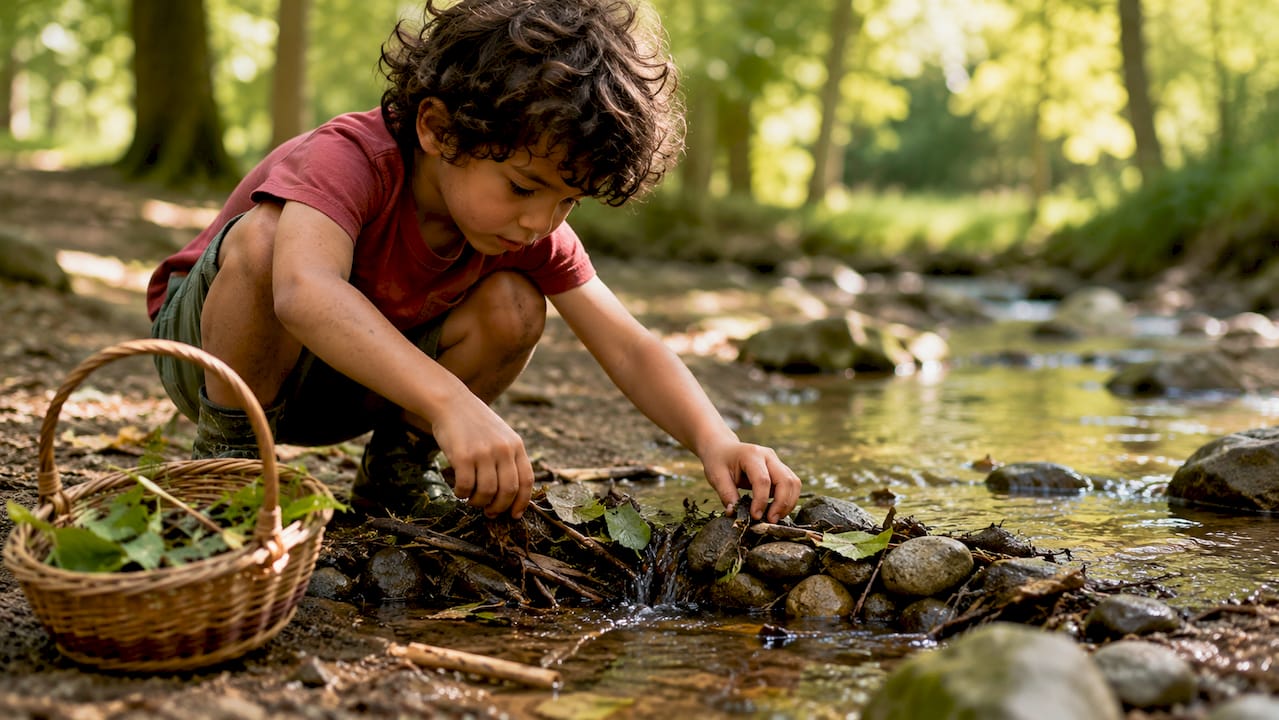
Outdoor literacy activities align directly with academic standards. Educators can use natural materials to teach letter sounds through texture sorting, practice counting with acorns or pebbles, and build vocabulary by naming plants, insects, and weather patterns. The play-based learning connection is direct: children encode information more deeply when they encounter it through physical experience.
Pro Tip: Rotate natural loose parts, such as pinecones, seed pods, and smooth stones, weekly to sustain novelty and keep children’s inquiry sharp.
Nature also builds executive function through open-ended problem solving. When a child decides how to dam a stream with sticks or balance a flat rock on an uneven surface, they practice planning, impulse control, and flexible thinking. These are the same executive function skills that predict kindergarten readiness more reliably than rote academic drills.
What are the social-emotional and physical benefits of nature in early childhood?
Children in nature-based settings show enhanced peer play and cooperative behavior compared to peers in traditional indoor programs. The open, unstructured quality of outdoor environments reduces competition for resources and creates natural opportunities for negotiation, role assignment, and shared problem solving.
Physical challenges in outdoor settings build motor development in ways that indoor gyms rarely match. Climbing a tree, balancing on a log, and navigating uneven terrain all require children to assess risk, calibrate their own bodies, and build genuine confidence. Allowing physical risk outdoors is not negligence. It is a recognized strategy for building resilience and gross motor outcomes.
The emotional benefits run equally deep. Regular contact with living things, plants, animals, and changing seasons, builds empathy and emotional regulation. Children who care for a garden bed or observe a bird’s nest develop a sense of responsibility that transfers to peer relationships. Environmental stewardship starts here, not in a high school ecology class.
- Peer cooperation. Outdoor settings reduce resource competition and prompt children to negotiate roles naturally.
- Gross motor development. Climbing, balancing, and running on uneven ground build strength and body awareness.
- Emotional regulation. Quiet time in nature lowers cortisol and supports self-calming strategies.
- Empathy and stewardship. Caring for living things builds responsibility and pro-environmental attitudes.
- Risk assessment. Managed physical challenges teach children to evaluate their own limits safely.
Pro Tip: Give children unstructured outdoor time before structured group activities. Children who have already moved and explored arrive at group tasks calmer and more focused.
Practical ways to integrate nature meaningfully into preschool curricula
Meaningful integration means nature becomes the learning context, not a theme week or a seasonal craft. The shift is significant. A theme week about autumn leaves is decoration. Spending thirty minutes outside observing how leaves change, collecting samples, sorting by color and shape, and dictating observations to a teacher is science, literacy, and math in one session.
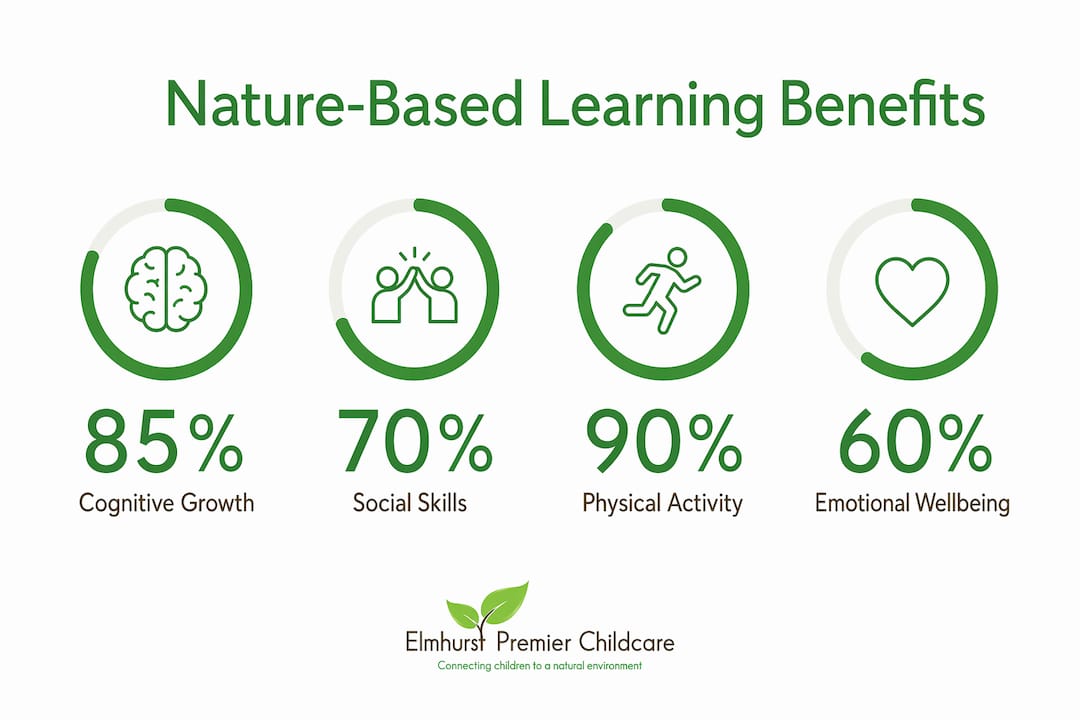
Curriculum frameworks work best as organizing tools that document child-led nature studies rather than as scripts educators follow. When a child becomes fascinated by worms after a rainstorm, a skilled teacher documents that inquiry and maps it to developmental benchmarks. The child’s curiosity drives the learning. The standards get met along the way.
Loose natural materials are the most effective and least expensive curriculum tools available. Sticks, stones, leaves, bark, and seed pods invite open-ended play that commercial kits cannot replicate. Minimal adult planning is actually recommended. Educators who over-plan outdoor sessions often interrupt the child-led discovery that makes nature learning so effective.
- Set up accessible stations with natural loose parts and step back.
- Schedule extended outdoor sessions of up to 2 hours to maximize sensory input and cognitive engagement.
- Document children’s observations through photos, drawings, and dictated notes.
- Map those observations to state standards after the session, not before.
- Rotate materials seasonally to reflect the natural world children are actually experiencing.
Balancing safety and freedom requires clear thinking, not excessive caution. The goal is not a risk-free environment. It is a thoughtfully supervised one where children encounter manageable challenges and learn to navigate them.
What challenges come with implementing a nature-based preschool curriculum?
The most common barrier is an institutional “add-on” mindset. When nature learning is treated as supplementary, it gets cut first when academic pressure increases or schedules tighten. The fix is structural: protected outdoor time must be written into the daily schedule, not left to discretion.
Teacher confidence is the single strongest predictor of successful nature-based learning. Confident educators generate higher student engagement than those who rely on structured indoor activities. Professional development that builds outdoor facilitation skills is not optional for programs serious about this approach. It is the foundation.
Urban settings and unpredictable weather present real but solvable challenges. Indoor nature stations with living plants, sensory bins filled with natural materials, and window-based observation activities maintain the philosophy when outdoor access is limited. Hybrid approaches keep the learning continuous across seasons.
“Treating nature as an integrated philosophy rather than a supplementary add-on prevents it from being marginalized by other curriculum priorities. When outdoor learning is embedded in the program’s identity, it survives schedule changes, administrative turnover, and seasonal constraints.”
Aligning nature-based activities with state standards is not a compromise. It is a communication strategy. When educators document how a child’s outdoor inquiry maps to specific developmental benchmarks, administrators and parents see the academic value clearly. Community partnerships with local parks, nature centers, and environmental organizations also strengthen the program’s credibility and resources.
Key Takeaways
Nature-based learning is most effective when it serves as the core curriculum framework, not a supplementary activity, because it develops cognitive, physical, and social-emotional skills simultaneously.
| Point | Details |
|---|---|
| Nature as core framework | Treating outdoor learning as the organizing context prevents it from being cut when academic pressure rises. |
| Academic parity confirmed | Children in nature-based programs develop early literacy and executive function at rates equal to traditional programs. |
| Teacher confidence drives outcomes | Educator comfort outdoors predicts student engagement more than the quality of the physical environment. |
| Loose parts over commercial kits | Natural materials like sticks, stones, and leaves generate deeper creative and cognitive engagement than structured kits. |
| Document child-led inquiry | Mapping children’s natural observations to state standards satisfies curriculum requirements without sacrificing autonomy. |
Why I think most programs are still getting nature wrong
I have watched well-meaning programs add a “nature walk” to Friday afternoons and call it nature-based learning. That is not what the research supports, and it is not what children need.
The programs that actually move the needle treat nature as the classroom itself, not as a reward or a break from real learning. Teachers in those programs are facilitators. They follow a child’s question about why the mud smells different after rain and turn it into a week of sensory science. They do not interrupt discovery to redirect children to the planned activity.
What I find most compelling is that the teacher’s mindset matters more than the setting. A confident educator in an urban schoolyard with a patch of dirt and a few potted plants can deliver richer nature-based learning than an anxious teacher in a forest school with unlimited resources. The certified educator’s role is to trust the environment and trust the child.
The future of early childhood education runs through the outdoors. Programs that embed nature as a core philosophy now are building children who are curious, resilient, and genuinely connected to the world around them. That is not a soft outcome. That is the foundation of every hard skill that follows.
— Kasindra
Nature-integrated learning at Elmhurst Premier Childcare
Elmhurst Premier Childcare’s approach to early childhood education puts research-backed, hands-on learning at the center of every program. The preschool program integrates nature exploration directly into its STEAM curriculum, giving children the sensory-rich, inquiry-driven experiences that build genuine school readiness.

Every educator at Elmhurst Premier Childcare holds an early childhood degree or a Child Development Associate (CDA) or Certified Childcare Professional (CCP) credential. That standard means the teachers facilitating outdoor learning are trained to document child-led inquiry, align it with developmental benchmarks, and communicate its value to families. Parents who want a program where nature is a core philosophy, not a Friday afternoon add-on, can book a tour to see the difference firsthand.
FAQ
What is the role of nature in preschool curriculum?
Nature serves as the primary learning context in a nature-based preschool curriculum, supporting cognitive, physical, and social-emotional development simultaneously. It is the organizing framework for inquiry-driven learning, not a supplementary activity.
Do children in nature-based preschools fall behind academically?
No. Research shows children in nature-based programs develop early literacy and executive function skills at rates comparable to peers in traditional indoor programs, supporting full kindergarten readiness.
How much outdoor time do preschoolers need for nature learning to be effective?
Extended outdoor sessions of up to 2 hours maximize sensory input and cognitive engagement. Shorter, fragmented outdoor periods produce significantly less developmental benefit.
What materials work best for outdoor preschool activities?
Loose natural materials, including sticks, stones, leaves, and seed pods, outperform commercial kits for creative and cognitive engagement. They are free, seasonally varied, and require minimal adult preparation.
How can educators align nature-based learning with academic standards?
Educators use curriculum frameworks as documentation tools, mapping children’s natural observations and inquiries to specific developmental benchmarks after the session. This preserves child-led discovery while meeting state standards.