
Play-based learning is defined as an educational approach where children develop cognitive, social, emotional, and physical skills through structured and self-directed play experiences. The role of play-based learning in preschool is not supplemental. It is the primary vehicle through which children ages 3–6 build the foundations for lifelong learning. The American Academy of Pediatrics and the National Academies of Sciences, Engineering, and Medicine (NASEM) both recognize play as central to healthy child development. Research published in 2026 confirms what educators have long observed: children who learn through play show stronger problem-solving skills, better emotional regulation, and greater academic readiness than peers in purely instruction-driven programs.
How does play-based learning benefit cognitive and academic development?
Play-based learning produces measurable cognitive gains in preschool-age children. A 2026 scoping review of 51 studies covering 1,811 articles found consistent improvements in independence and problem-solving skills for children ages 4 to 6 across multiple continents. That breadth of evidence makes this one of the strongest research cases for play in early education.
One specific example stands out. A 2026 guided play study on multimodal play with 4 and 5 year olds showed that sequenced play sessions combining pretend play and structured games improved geometric reasoning and vocabulary precision. Children learned to describe shapes using attribute-based language, a skill directly tied to math readiness. This is not incidental learning. It is targeted academic growth delivered through play.
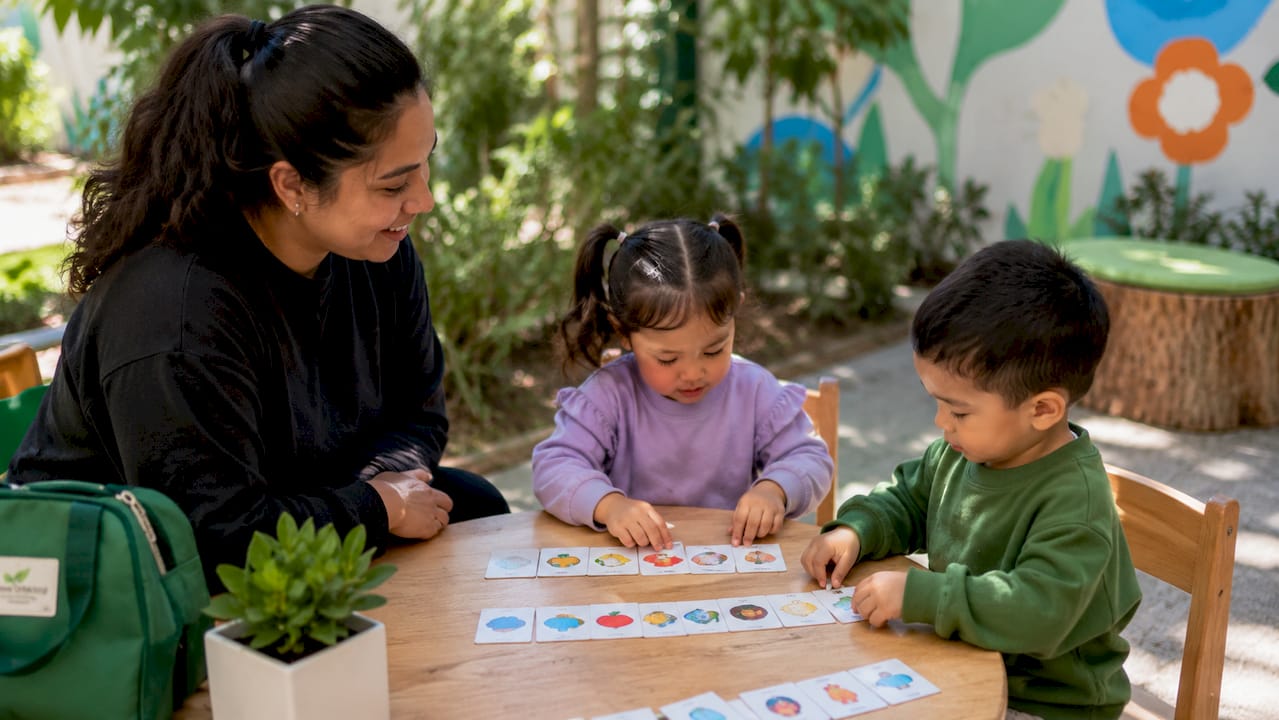
Play also builds higher-order thinking in ways that worksheets cannot replicate. When a child decides how to build a block tower that will not fall, they are testing hypotheses. When they negotiate roles in a pretend grocery store, they are practicing language, logic, and social reasoning simultaneously. These are exactly the cognitive skills kindergarten teachers look for.
Key cognitive benefits of play-based learning in preschool include:
- Problem-solving: Children generate and test solutions without fear of failure.
- Language development: Vocabulary grows faster in play contexts than in direct instruction alone.
- Math and spatial reasoning: Guided play with shapes, patterns, and building materials builds early STEM foundations.
- Executive function: Managing rules in games trains working memory and impulse control.
- Creativity: Open-ended play produces flexible thinking, a skill no standardized test can teach.
Pro Tip: Watch for moments when your child explains their play to you. That narration is a sign of strong cognitive processing. Ask open-ended questions like “What happens if you try it this way?” to extend the thinking without taking over.
How does play support social, emotional, and mental health?
Play is the single most effective tool preschool-age children have for building emotional and social competence. The American Academy of Pediatrics frames play as essential for mitigating toxic stress and building the nurturing relationships that drive healthy development. That framing matters because it positions play not as a luxury but as a health intervention.
A longitudinal study found that children with higher levels of pretend play at ages 2 and 3 showed fewer internalizing and externalizing behavioral problems at ages 4 through 7. The effect held even after researchers controlled for attachment factors. That means pretend play itself, not just secure attachment, independently protects mental health.
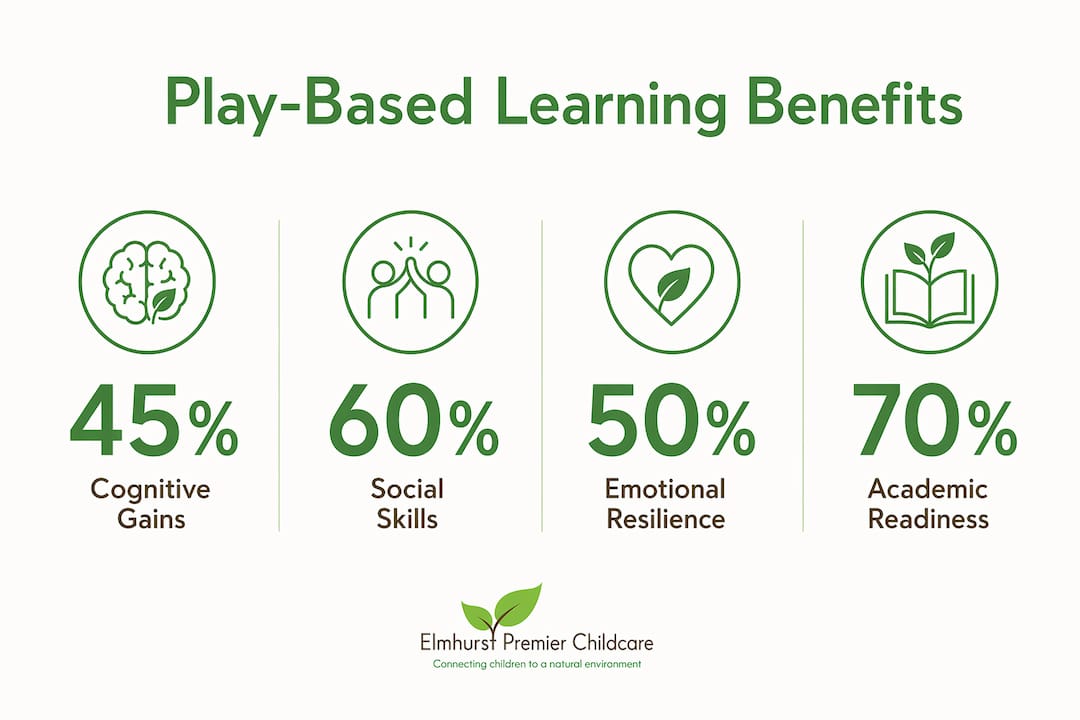
Sociodramatic play, where children act out stories and take on roles, is especially powerful. When a child plays “doctor” or “family,” they practice reading emotions, managing conflict, and cooperating toward a shared goal. These are not soft skills. They are the social competencies that predict school success and peer relationships.
Parents can support this development at home by following these steps:
- Set up open-ended scenarios. A cardboard box becomes a spaceship, a store, or a house. The less defined the prop, the more creative the social play.
- Let children lead. Resist the urge to direct the story. Your role is audience and occasional co-player, not director.
- Name emotions during play. When a stuffed animal is “sad,” use that moment to talk about feelings naturally.
- Encourage mixed-age play. Older children model more complex social scripts. Younger children stretch to keep up.
- Protect unstructured time. Overscheduled children lose the practice time that builds emotional regulation.
“Play is not a break from learning. It is how children learn to be human.” — American Academy of Pediatrics, 2026
Pro Tip: If your child struggles with transitions or emotional outbursts, increase pretend play time at home. Research links higher pretend play frequency to better emotional regulation, not just better behavior.
What types of play are used in a preschool play curriculum?
Not all play is the same, and the distinction matters for parents evaluating preschool programs. NASEM’s 2024 curriculum vision identifies three core play types, each serving a different developmental purpose.
| Play type | Who leads | Primary benefit | Educator role |
|---|---|---|---|
| Adult-directed playful activities | Educator | Targeted skill instruction | Designs and leads the activity |
| Guided play | Shared | Curiosity, higher-order thinking | Sets environment, asks questions |
| Free/child-initiated play | Child | Creativity, autonomy, social skills | Observes, supports when needed |
NASEM research shows that guided play links directly to positive preschool learning outcomes, particularly in curiosity and higher-order thinking. Guided play is not free play with a teacher nearby. It requires planned learning intentions and deliberate provocations, such as placing a scale in the block area to prompt questions about weight and balance.
The debate between play and academics is a false choice. The most effective preschool programs integrate all three play types across the day. A morning might begin with a teacher-led song that introduces new vocabulary, move into guided play at a science table, and end with free choice time in the dramatic play corner. Each type builds something the others cannot fully replicate.
Educators in sociodramatic play settings shift between three roles: co-player, stage manager, and leader. Victorian early childhood guidelines describe how educators who model literacy behaviors inside play, such as writing a shopping list during a store scenario, produce stronger emergent literacy outcomes than those who teach reading and writing separately. That is a concrete example of how the educator’s role transforms play from entertainment into education.
How can parents support play-based learning at home and in preschool?
Parents are not passive observers of their child’s play development. They are the most influential play partners a preschool child has. The key is learning when to step in and when to step back.
At home, the most effective play-based learning activities share three features: open-ended materials, low adult direction, and enough uninterrupted time for children to develop their own ideas. Blocks, art supplies, water tables, and dress-up clothes consistently outperform electronic toys for developmental outcomes. The reason is simple. Open-ended materials require children to generate the play, which is where the cognitive and social work happens.
Educator research shows that 36% of educators report needing more professional development to deliver child-led play effectively. That finding applies to parents too. Knowing how to observe and extend play without taking it over is a skill, not an instinct. Parents who learn to ask “What are you making?” instead of “Make a house” see richer, longer play episodes from their children.
When evaluating a preschool, ask specific questions about the play curriculum. A quality program will describe how teachers set up the environment, what learning intentions guide each play area, and how they document children’s progress through play. Vague answers like “we let them play” signal a lack of intentionality. Strong programs can explain the purpose behind every center in the classroom.
- Ask about the balance of play types. A good program uses adult-directed, guided, and free play across the day.
- Look at the classroom environment. Rich play spaces with varied materials signal intentional curriculum design.
- Check educator qualifications. Teachers who understand child development facilitate better play. At Elmhurst Premier Childcare, every educator holds an early childhood degree or is working toward a Child Development Associate (CDA) or Certified Childcare Professional (CCP) credential.
- Review parent resources offered by the school to understand how they support learning at home.
Pro Tip: When talking with your child’s teacher, ask: “What did you notice about my child’s play this week?” A teacher who can answer specifically is observing with intention. That observation is the foundation of quality play-based teaching.
Key Takeaways
Play-based learning is the most research-supported approach to preschool education, producing cognitive, social, emotional, and academic gains when delivered with intentional educator guidance.
| Point | Details |
|---|---|
| Play drives real academic gains | A 2026 scoping review of 51 studies confirms cognitive and problem-solving improvements in children ages 4 to 6. |
| Pretend play protects mental health | Children with more pretend play at ages 2 to 3 show fewer behavioral problems through age 7. |
| Three play types work together | Adult-directed, guided, and free play each serve distinct purposes and work best when combined. |
| Educator skill determines outcomes | Play-based learning succeeds when teachers observe, scaffold, and set intentional environments. |
| Parents are key play partners | Open-ended materials, unstructured time, and asking open questions extend children’s learning at home. |
What I’ve learned watching play-based classrooms up close
The research is clear, but the lived reality of a well-run play-based preschool is something data cannot fully capture. I have watched 4-year-olds negotiate the rules of an imaginary restaurant with more social sophistication than many adults bring to a staff meeting. That kind of competence does not come from a worksheet. It comes from hundreds of hours of practice in exactly the kind of low-stakes, high-engagement environment that good play-based programs create.
The biggest mistake I see is treating play as either completely free or completely teacher-controlled. Both extremes fail children. Completely free play without any adult scaffolding can stall. Children repeat the same scripts and miss opportunities to stretch. Overly directed play kills the child’s sense of ownership and curiosity. The sweet spot is guided play, where a skilled teacher sets a rich environment, plants a provocation, and then gets out of the way while staying close enough to extend the thinking.
Parents sometimes worry that a play-heavy preschool is not preparing their child for kindergarten. That worry is understandable but misplaced. The skills kindergarten teachers most want, including the ability to focus, cooperate, communicate, and persist through difficulty, are built through play, not despite it. The STEAM curriculum approach that integrates play with science, technology, engineering, art, and math is exactly the kind of intentional design that produces kindergarten-ready children.
Advocate for play. Ask your child’s school hard questions about how they use it. And trust that a child who plays deeply is a child who is learning seriously.
— Kasindra
Elmhurst Premier Childcare’s approach to play-based preschool
At Elmhurst Premier Childcare, play is not a break between lessons. It is the lesson. The preschool program is built on a hands-on STEAM curriculum that integrates guided play, child-initiated exploration, and intentional educator support across every part of the day. Every teacher holds or is actively earning an early childhood credential, which means the play your child experiences is facilitated by someone trained to make it count.
Families in Elmhurst choose this program because they see the difference between a school that understands child development and one that simply supervises children. The Pre-K program extends that same play-based philosophy into kindergarten readiness. If you want to see the classrooms and meet the teachers, book a tour and experience the difference firsthand.
FAQ
What is play-based learning in preschool?
Play-based learning is an educational approach where children develop cognitive, social, emotional, and physical skills through structured and self-directed play. It is recognized by the American Academy of Pediatrics and NASEM as the most developmentally appropriate method for children ages 3 to 6.
Is play-based learning as effective as direct instruction?
Play-based learning produces equal or stronger outcomes than direct instruction for preschool-age children. A 2026 scoping review of 51 studies confirmed cognitive, academic, and social-emotional gains across multiple continents.
What is the role of dramatic play in preschool learning?
Dramatic and pretend play builds language, emotional regulation, and social skills simultaneously. Longitudinal research links higher pretend play at ages 2 to 3 with fewer behavioral problems through age 7.
How do I know if a preschool has a quality play-based curriculum?
Ask teachers to describe the learning intentions behind each classroom play area. Quality programs can explain what skills each space targets and how educators observe and document children’s progress through play.
How can I support play-based learning at home?
Provide open-ended materials like blocks, art supplies, and dress-up clothes, protect uninterrupted play time, and ask open-ended questions rather than directing the play. These three practices consistently extend children’s learning beyond the classroom.