
Infant daycare is a licensed, specialized program designed exclusively for babies aged 6 weeks to 18 months, built around low caregiver-to-infant ratios, safe sleep protocols, and responsive caregiving that supports early attachment and development. Unlike general childcare, infant daycare programs are structured around each baby’s individual rhythms, not a fixed group schedule. The industry term is “infant care,” though “infant daycare” is widely used by parents searching for these services. Understanding what separates a quality infant care program from a basic babysitting arrangement is the most important decision you will make in your child’s first year.
What is infant daycare and how does it differ from other childcare?
Infant daycare is not simply a younger version of preschool. The entire program is built around the fact that babies cannot talk. They cannot tell a caregiver they are hungry, tired, or scared. That reality shapes everything, from staffing to room design to daily schedules.
The defining feature of quality infant daycare is the caregiver-to-infant ratio. The recommended ratio is 1:3, meaning one caregiver for every three babies, with a maximum of 1:4. That limit exists because infants require constant, individualized attention that simply cannot be divided across more children without compromising safety.

Infant care also differs from toddler or preschool care in its developmental focus. Infant care prioritizes pre-verbal needs over stimulation activities. A caregiver’s ability to read a baby’s cues, respond consistently, and build trust matters far more than any curriculum at this age. Parents evaluating programs should ask specifically how staff are trained to recognize and respond to infant communication signals.
What features define a quality infant daycare program?
Quality infant daycare programs share a specific set of standards. Knowing these features helps you tell the difference between a program that meets minimum state requirements and one that genuinely serves your baby’s needs.
Core features to look for:
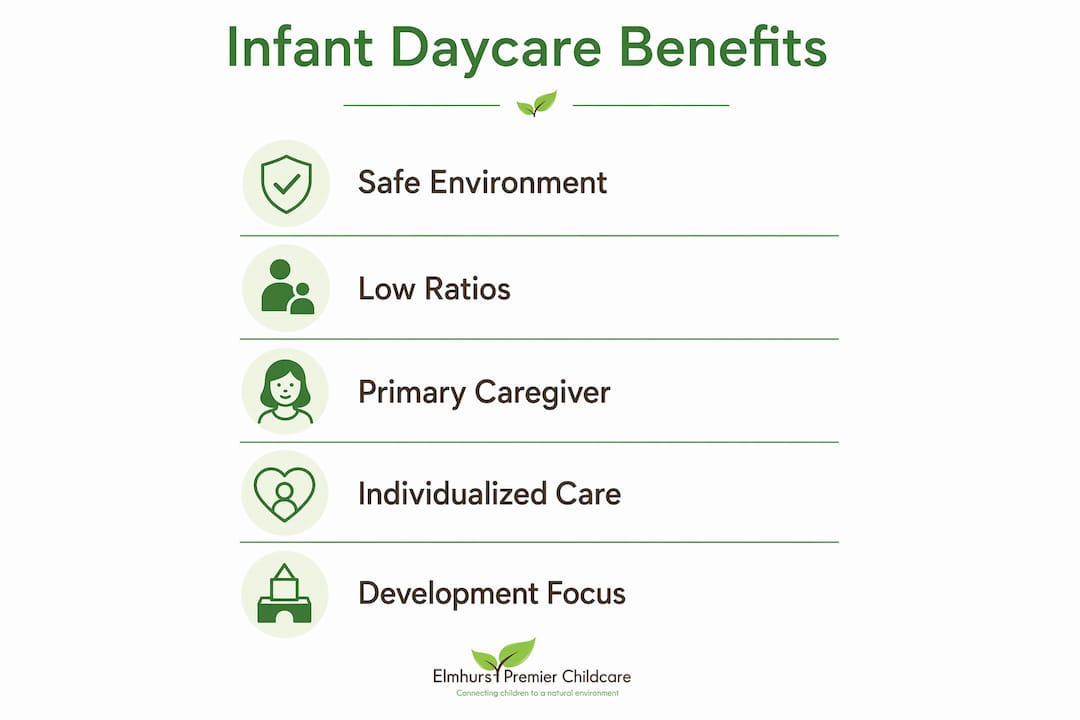
- Low caregiver-to-infant ratios. The ideal ratio is 1:3, never exceeding 1:4. Higher ratios mean less individual attention and slower response to your baby’s cues.
- The Primary Caregiving Model. One designated caregiver handles your baby’s feeding, diapering, and soothing consistently. This consistent caregiver builds secure attachment faster than rotating staff.
- Safe sleep protocols. Every nap must follow back-sleeping guidelines in a firm, flat sleep space with no loose bedding. This is non-negotiable.
- Specialized staff training. Caregivers should hold infant CPR certification and have documented experience with babies, not just general childcare credentials.
- Developmentally appropriate environments. Rooms should be calm, low-stimulation, and designed for floor play, tummy time, and sensory exploration, not structured lessons.
Pro Tip: Ask every center you tour one direct question: “Who is my baby’s primary caregiver, and what happens when that person is absent?” The answer tells you immediately whether the program uses a true primary caregiving model or just claims to.
Staff turnover is one of the most overlooked quality indicators. High turnover breaks the attachment bonds infants depend on. A center with low turnover and experienced, credentialed staff is a stronger choice than one with a beautiful facility and revolving caregivers.
What are the developmental and health benefits of infant daycare?
Quality infant daycare produces measurable benefits that extend well beyond the first year of life.
“Children who received 35 or more hours per week of formal childcare experienced fewer internalizing behavioral symptoms through middle childhood, with benefits persisting to age 14.”
That finding reframes how parents should think about early care. High-quality infant daycare is not just a convenience for working families. It is an investment in long-term emotional regulation and social competence.
The developmental benefits of quality infant daycare include:
- Socio-emotional growth. Responsive caregiving and early peer exposure build a baby’s capacity for trust, emotional regulation, and social awareness.
- Cognitive stimulation. Consistent talking, singing, and sensory play from trained caregivers supports language development and brain growth during the most critical window of neurological development.
- Immune system development. Gut microbial diversity increases within as little as one month of group care exposure. Microbial sharing among infants in group settings strengthens immune resilience, including helping babies recover beneficial gut bacteria after antibiotic use.
- Milestone support. Trained caregivers recognize developmental milestones and flag delays early, connecting families with resources before small concerns become larger challenges.
- Family stability. Quality infant daycare supports working parents in sustaining employment, which directly affects overall family well-being and financial security.
The immune benefit surprises most parents. Group care is often framed as a germ risk. The research shows the opposite: structured group exposure builds a stronger immune foundation than isolated home care.
How does a typical day work in infant daycare?
Infant daycare does not run on a fixed group schedule. Each baby follows their own rhythm, and a quality program builds the day around that individual pattern.
A typical day in a quality infant care program looks like this:
- Arrival and transition. The primary caregiver greets your baby and receives a verbal handoff from you covering the last feeding, sleep, and mood. This information shapes the morning.
- Individualized feeding. Bottles are prepared and offered according to your baby’s personal schedule, not a center-wide feeding time. Breastmilk is stored and labeled per your instructions.
- Awake and active time. Individualized play schedules include tummy time, sensory exploration, age-appropriate toys, and caregiver interaction through talking, singing, and reading. Activities match each baby’s developmental stage.
- Nap time. Sleep follows your baby’s natural cues, not a scheduled quiet hour. Safe sleep protocols are followed for every nap, every time.
- Soothing and holding. Responsive caregiving means babies are held, talked to, and comforted promptly. Infants are not left to self-soothe in ways that create distress.
- Daily communication. Parents receive updates throughout the day covering feedings, diaper changes, sleep times, and mood. Many centers use apps; others use written logs. Either way, you stay informed.
The role of routine for newborns is not about rigid scheduling. It is about predictable, responsive care that helps babies feel safe. A quality infant daycare program understands that distinction.
How to choose quality infant daycare: key questions to ask
Choosing infant daycare requires more than comparing locations and prices. Caregiver quality and environment stability are the strongest predictors of a positive outcome for your child.
| What to evaluate | What to look for |
|---|---|
| Caregiver qualifications | Degree or credential in Early Childhood Education, infant CPR certified |
| Staff turnover | Low turnover signals a stable, well-supported team |
| Caregiver-to-infant ratio | 1:3 ideal, 1:4 maximum; ask about substitute coverage |
| Primary caregiving model | One assigned caregiver per baby, consistent daily |
| Communication practices | Daily written or app-based updates on feeding, sleep, and mood |
| Safety protocols | Back-sleeping, labeled bottles, secure entry, emergency procedures |
| Emotional warmth | Watch how caregivers interact with babies during your tour |
Start your search early. Waitlists for infant slots run longer than for any other age group because state-mandated ratios limit how many babies each room can serve. Parents should begin searching 6–12 months before their anticipated start date.
Pro Tip: Visit during mid-morning, roughly 9:00 to 10:30 a.m. That is when you will see the most caregiving activity. Watch whether babies are held and talked to, or left in bouncers and swings. That observation tells you more than any brochure.
Ask directly about what happens when your baby’s primary caregiver is absent. A quality program has a named backup, not a rotating pool of whoever is available that day. Also ask how the center handles feeding preferences, sleep transitions, and your baby’s specific temperament. A program that listens carefully to those answers is one that will actually follow through.
Key takeaways
Quality infant daycare is defined by low caregiver-to-infant ratios, a primary caregiving model, and individualized routines that support secure attachment and long-term developmental outcomes.
| Point | Details |
|---|---|
| Ratio is the baseline | The ideal caregiver-to-infant ratio is 1:3; never enroll in a program exceeding 1:4. |
| Primary caregiver matters most | One consistent caregiver builds trust and secure attachment faster than rotating staff. |
| Start your search early | Begin looking 6–12 months ahead; infant slots fill faster than any other age group. |
| Benefits extend beyond infancy | Quality care reduces behavioral symptoms through middle childhood and strengthens immune resilience. |
| Evaluate warmth, not just credentials | Watch how caregivers interact with babies during your tour. That observation outweighs any checklist. |
What I’ve learned that most infant daycare articles skip
The primary caregiving model is the single most important feature in any infant program, and most parents never ask about it. They tour a facility, check the ratio, and look at the toys. They rarely ask, “Who specifically will care for my baby every day, and how does your program protect that relationship?”
I have seen families choose a center based on proximity or price, only to realize weeks in that their baby rotates through four or five different caregivers daily. That is not infant care. That is group babysitting. The research on secure attachment development is clear: consistency is the mechanism. Without it, the other features do not matter much.
The transition period is also harder than most parents expect. Most families adjust within a few weeks when the care quality is genuinely high. The adjustment is not a sign something is wrong. It is a sign you are both learning something new. What makes the difference is not the speed of adjustment. It is the quality of the environment your baby is adjusting to.
One more thing parents overlook: the immune benefits of group care are real and documented. Parents often feel guilty about group exposure during cold season. The science says that microbial sharing in group settings builds a stronger immune system over time. That does not mean illness is fun. It means the long view is more reassuring than the short one.
— Kasindra
Infant daycare in Elmhurst, IL: a program built around your baby

Elmhurst Premier Childcare offers infant daycare in Elmhurst, IL built on the exact standards this article describes: low caregiver-to-infant ratios, a primary caregiving model, and staff who hold Early Childhood Education degrees or Child Development Associate credentials. Every educator goes beyond state minimum requirements. Elmhurst Premier Childcare is locally owned, which means decisions about your child’s care are made here in Elmhurst, not in a corporate office. Families also benefit from fresh, nutritious meals through the ChildEats nutrition program and daily communication that keeps you connected. If you are ready to see the difference in person, book a tour and meet the team caring for Elmhurst’s youngest learners.
FAQ
What age does infant daycare serve?
Infant daycare typically serves babies from 6 weeks to 18 months old. Programs are licensed specifically for this age group and staffed by caregivers trained in infant development and safety.
What is a good caregiver-to-infant ratio?
The recommended ratio is 1:3, meaning one caregiver for every three infants. State regulations often allow up to 1:4, but the lower ratio provides more responsive, individualized care.
How early should I start looking for infant daycare?
Start searching 6–12 months before your baby’s anticipated start date. Infant slots fill faster than any other age group because strict ratio requirements limit how many babies each room can serve.
Does infant daycare help with development?
Yes. Research shows that quality formal childcare for children under 3 improves long-term non-cognitive skills, with benefits persisting through age 14. Group care also builds immune resilience through microbial diversity.
What is the primary caregiving model?
The primary caregiving model assigns one specific caregiver to handle a baby’s feeding, diapering, and soothing consistently each day. This consistency builds secure attachment and trust, which are foundational to healthy infant development.